Canon EOS 5D Mark III
A reference DSLR that still delivers, with caveats at this point


We analyze a specific unit of the Canon EOS 5D Mark III with grade B, from our verification workshop. We review its actual condition, its performance, and who it makes sense for today.
- 22 MP full-frame sensor with dynamic range and colors that still hold up
- 61-point autofocus system that was very capable for its time and still is today
- Weather-sealed construction and professional-body ergonomics
- No declared shutter count on this unit, which limits assessment of wear
- Weight and bulk typical of a DSLR, impractical compared to current mirrorless cameras
- Video limited to 1080p and no modern continuous autofocus features
The Canon EOS 5D Mark III is one of those cameras that defined a generation. Launched as the successor to the 5D Mark II, it became a workhorse for studio, photojournalism, and weddings for years. Today, more than a decade later, it still shows up in our workshop regularly, and that says something about its longevity. It’s not a trendy camera, but it’s not a relic either: it’s a tool that, well maintained, still does its job.
The unit we’re reviewing today arrived at our verification workshop through the usual inventory flow. It’s a 5D Mark III with grade B, which on our scale means it shows visible signs of use but without compromising its operation. It’s a unit that has lived, and that shows both on the outside and, presumably, in its shooting history.
Data for this unit
| Data | Value |
|---|---|
| Shutter count | Not declared |
| Battery health | Not declared |
| Condition grade | B |
| Lab observations | No relevant physical issues; overall condition excellent |
| Accessories included | No accessories declared |
It’s worth being transparent: for this unit we don’t have a shutter count or a battery health report. That’s a real limitation when assessing internal wear, and we prefer to say so rather than fill the gap with estimates. What we do know is that the lab found no physical problems and rated the overall condition as excellent within its grade.
The model in general
The 5D Mark III has a 22-megapixel full-frame sensor that, even today, still delivers perfectly usable files. Its dynamic range doesn’t compete with modern sensors, but its high-ISO response and, above all, its color remain solid arguments for anyone who prioritizes the final result over the numbers.
The 61-point autofocus system was one of its big leaps over the Mark II, and it’s still competent for light sports photography, photojournalism, and portraiture. It’s not the AF of a current mirrorless camera, either in coverage or tracking, but for relatively predictable subjects it performs without drama.
In ergonomics, it’s a classic DSLR: a large, sealed body with dual dials and a control layout that many photographers still prefer. The price of that robustness is weight and bulk, which today are noticeable compared to mirrorless alternatives.
What works
The first thing that stands out when working with a well-maintained 5D Mark III is the feeling of solidity. The body inspires confidence, the controls respond precisely, and the optical viewfinder is still a pleasure for anyone coming from that world. This particular unit, despite its grade B, maintains that feeling.
The sensor’s performance is still its strongest suit. 22 MP files with reasonable cropping room, good behavior up to ISO 3200-6400 with careful processing, and a color palette that many still associate with the “Canon look” of that era. For portraiture and photojournalism, it’s still a camera that delivers.
Compatibility with Canon’s extensive lineup of EF lenses is another point in its favor: today it’s possible to mount quality lenses at moderate prices, something that doesn’t always happen with more recent systems.
What weighs on it over the years
Not everything is positive, and it would be dishonest to present it that way. The absence of a declared shutter count on this unit is an unknown that the buyer must accept. On a model with so many years behind it, wear on the shutter mechanism is a real factor, and not being able to quantify it reduces peace of mind.
On the technical side, video is the most obvious limitation: 1080p without the continuous autofocus features that are taken for granted today. For anyone who shoots video regularly, this camera isn’t the option. Nor is it for anyone who needs modern connectivity, a touchscreen, or a subject-detection autofocus system.
Weight and bulk, already mentioned, are another factor to consider if you’re looking for something to carry all day. And the second-hand market, with six units available and an average price around 394 euros, offers alternatives worth comparing before deciding.
Who is this unit for?
This grade B 5D Mark III fits several profiles well. On one hand, the photographer who already has EF lenses and wants a second full-frame body without spending much. On the other, someone looking to get into full frame on a tight budget who doesn’t mind giving up the conveniences of current mirrorless cameras. It also makes sense for anyone who values the optical viewfinder and DSLR ergonomics over portability.
We wouldn’t recommend it, however, to anyone who shoots video frequently, or to anyone who needs the most advanced AF possible. Nor to anyone who wants certainty about shutter wear: on this unit, that information isn’t available.
Verdict
The Canon EOS 5D Mark III is still a camera capable of delivering professional results in photography, and this particular unit, despite its grade B, presents itself as a reasonable option within its price range. The lack of data on the shutter and battery is a point the buyer must weigh, but the overall condition verified by the lab invites optimism. It’s a sensible purchase for anyone who knows what they’re looking for and accepts the limitations of a DSLR from its generation.
Afiliación interna declarada. Camera Market Reviews es el blog de Camera Market. Si compras a través de este enlace lo verás en tu factura como compra directa al marketplace — no hay intermediarios ni comisiones para terceros. Lee la política completa.
Reviews relacionadas

Blackmagic Design Pocket Cinema Camera: una unidad impecable para quien busca cine RAW sin concesiones
Esta unidad concreta de la Blackmagic Pocket Cinema Camera llega en estado excelente, sin desgaste físico apreciable. Un modelo que, incluso hoy, ofrece una calidad de imagen RAW que pocas cámaras de su precio pueden igualar, aunque con limitaciones de autonomía y enfoque que hay que conocer.

Blackmagic Design Blackmagic Design Pocket Cinema 6K
Analizamos una unidad concreta de la Blackmagic Pocket Cinema 6K, una cámara de cine con sensor Super35 y montura Canon EF que ha pasado por nuestro taller. Descubre su estado real y si merece la pena en 2026.
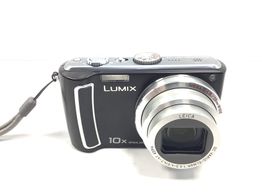
Panasonic Lumix DMC-TZ5: Una compacta travel zoom con buen estado general
Analizamos una unidad concreta de la Panasonic Lumix DMC-TZ5 que ha pasado por nuestro taller. Una compacta travel zoom de 2008 que, con 9,1 megapíxeles y un objetivo Leica 10x, sigue siendo una opción funcional para quien busca una cámara sencilla y ligera.