Canon EOS 550D
An entry-level DSLR that still makes sense in 2026 for the price
We review a specific Canon EOS 550D unit graded B with excellent physical condition. An entry-level classic that at €116 still delivers if you know what to expect.
- Excellent physical condition for its age
- Price below the market average
- EF-S ecosystem with abundant and affordable lenses
- 18 MP APS-C sensor with limited ISO ceiling
- No shutter count or battery health data on this unit
- Very slow contrast-detect autofocus in Live View
The Canon EOS 550D is one of those cameras that keeps showing up in our workshop again and again. Launched in 2010 as the successor to the 500D, it was for years the natural gateway into Canon’s DSLR system for enthusiasts who wanted something more than a compact without jumping up to the semi-professional range. 18-megapixel APS-C sensor, Full HD video at 30p, 3-inch screen and a small body but with a reasonable grip. Today, fifteen years later, it remains one of the most sought-after DSLRs on the second-hand market thanks to its price-to-performance ratio.
The unit we have in inventory today arrived graded B and, according to our workshop observations, in excellent physical condition. It’s unusual to find a 550D this well preserved: no visible knocks, no deep marks on the body and the mount in good condition. The starting price, €116, is below the market average of the last 30 days, which sits at €127. With only four units available on the market right now, it’s one of those purchases worth deciding on quickly if it fits what you’re looking for.
One thing should be made clear before we go on: we have not been able to verify the shutter count or the battery health on this specific unit. It’s not an oversight, it’s a limitation of the model and of the condition in which many units from this generation arrive. We’re saying it upfront because it shapes part of the review.
Data for this unit
| Parameter | Value |
|---|---|
| Shutter count | Not available |
| Battery health | Not available |
| Condition grade | B |
| Lab observations | Excellent physical condition |
| Accessories included | None |
Grade B on our scale means the unit shows signs of use consistent with its age, but with no known functional defects. In this case, the workshop observation is clear: excellent physical condition. That doesn’t remove the uncertainty about the shutter, but it does reduce the risk of structural surprises.
The model in general
The 550D packs an 18 MP APS-C CMOS sensor with an ISO range of 100 to 6400, expandable to 12800. At the time it was a notable leap over the 500D, especially in resolution and noise control up to ISO 1600. Today, that ceiling falls short for indoor shots without flash or for night scenes: from ISO 3200 onwards luminance noise starts to become evident and chroma noise forces you to process the RAW carefully. It’s not a camera for shooting at night without a tripod or for sports in poorly lit halls.
The autofocus system is Canon’s classic from that era: 9 points, only the centre one being cross-type. It works well in decent light and with fast-aperture lenses, but it struggles in tricky conditions. In Live View, contrast-detect autofocus is slow and unreliable, something that clashes today with the experience of any modern mirrorless camera. For video, manual focus is practically mandatory.
Ergonomics is one of its strong points. The body is small but has a grip that lets you hold it securely, and the controls are well laid out for its category. The 3-inch, 1,040,000-dot screen is still usable, though it isn’t touch-sensitive or articulating. The optical viewfinder, with 95% coverage, does the job without fanfare.
What works
The 18 MP sensor still produces files with cropping headroom and enough detail for medium-sized prints. In controlled lighting conditions, up to ISO 800, the RAW files behave well and allow shadow recovery without excessive noise. Full HD video at 30p, though lacking today’s conveniences, produces usable files if you work with manual focus and a tripod.
The EF-S ecosystem is probably the biggest argument in favour of this camera. There are abundant, affordable lenses with proven quality: the kit 18-55 mm, the 50 mm f/1.8 STM, the 10-18 mm or the 55-250 mm. Any of them can be found on the second-hand market at very reasonable prices, and that makes the total cost of entry into the system low.
The LP-E8 battery life is decent by the standards of the era, though we haven’t been able to verify it on this unit. Under normal conditions, a well-maintained 550D gets around 400-500 shots per charge.
What weighs it down over the years
The main drawback is high-ISO performance. In 2026, with phones shooting at ISO 6400 without breaking a sweat, a 550D falls clearly behind indoors and at night. It’s not a defect of this unit, it’s a limitation of the model and it’s worth being clear about that before buying.
Live View autofocus is another weak point. If you’re coming from a mirrorless camera, the experience will feel frustrating. And if your intention is to shoot video with autofocus, this camera isn’t for you.
The absence of shutter count and battery health data on this specific unit adds a layer of uncertainty. It’s not something we can resolve from the workshop, but it is information the buyer should know. On a camera from 2010, the shutter is the component most likely to fail in the medium term.
Who is this unit for?
This 550D makes sense for someone who wants to get started in photography with a real DSLR, learn to shoot in manual and build a kit with affordable EF-S lenses. Also for anyone looking for a second backup camera or a camera to take travelling without worrying too much about the value of the gear.
We wouldn’t recommend it for anyone who needs video with reliable autofocus, for anyone who regularly shoots indoors in low light, or for anyone coming from a modern mirrorless camera and expecting a similar experience. Nor for anyone who wants guarantees about the shutter’s lifespan: we don’t have that data on this unit.
Verdict
At €116, in excellent physical condition and below the market average, this Canon EOS 550D is a sensible buy for anyone who knows what they’re buying. It’s a camera with clear limitations —a sensor that struggles at high ISOs, slow Live View autofocus, no shutter data— but also with solid virtues: a broad and affordable lens ecosystem, correct ergonomics and more than enough image quality in good lighting conditions. If you fit the profile, it’s one of those units that don’t last long in inventory.
Afiliación interna declarada. Camera Market Reviews es el blog de Camera Market. Si compras a través de este enlace lo verás en tu factura como compra directa al marketplace — no hay intermediarios ni comisiones para terceros. Lee la política completa.
Reviews relacionadas

Blackmagic Design Pocket Cinema Camera: una unidad impecable para quien busca cine RAW sin concesiones
Esta unidad concreta de la Blackmagic Pocket Cinema Camera llega en estado excelente, sin desgaste físico apreciable. Un modelo que, incluso hoy, ofrece una calidad de imagen RAW que pocas cámaras de su precio pueden igualar, aunque con limitaciones de autonomía y enfoque que hay que conocer.

Blackmagic Design Blackmagic Design Pocket Cinema 6K
Analizamos una unidad concreta de la Blackmagic Pocket Cinema 6K, una cámara de cine con sensor Super35 y montura Canon EF que ha pasado por nuestro taller. Descubre su estado real y si merece la pena en 2026.
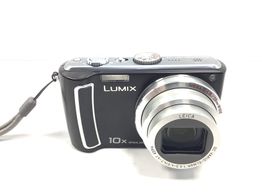
Panasonic Lumix DMC-TZ5: Una compacta travel zoom con buen estado general
Analizamos una unidad concreta de la Panasonic Lumix DMC-TZ5 que ha pasado por nuestro taller. Una compacta travel zoom de 2008 que, con 9,1 megapíxeles y un objetivo Leica 10x, sigue siendo una opción funcional para quien busca una cámara sencilla y ligera.